

Understanding Heart Health Beyond Cholesterol Numbers
When most people think about heart health, they think about cholesterol. While those numbers are important, they do not always reflect how well the heart and circulation are functioning from day to day. Blood work offers valuable information, but it captures only a snapshot in time. Subtle changes in energy, breathing, recovery, or exercise tolerance often appear long before lab values shift outside the reference range.
Viewing heart health through a systems-based lens helps those early patterns make more sense. The cardiovascular system is closely connected to blood sugar regulation, inflammation, nervous system balance, sleep, and stress. When one area becomes strained, the heart may compensate in ways that are not immediately obvious. The sections below explore common symptoms people notice, possible underlying contributors, and practical lifestyle strategies that can support long-term cardiovascular resilience.
Common Symptoms or Patterns People Notice
When people think about heart problems, they often imagine sudden chest pain or a medical emergency. In reality, cardiovascular strain more commonly shows up in subtle, gradual ways. The body often gives small signals long before anything severe develops.
Many people describe changes such as:
- Feeling short of breath during activities that used to feel easy
- Fatigue that seems out of proportion to the amount of effort being used
- A sensation of skipped, fluttering, or pounding heartbeats
- Lightheadedness when standing up quickly
- Reduced stamina during exercise or daily tasks
- Cold hands and feet, especially in cooler environments
- Difficulty bouncing back after physical exertion or emotional stress
These patterns do not automatically mean something serious is present. In many cases, they reflect how the heart and circulation are adapting to stress, inflammation, blood sugar fluctuations, or nervous system imbalance. However, when these symptoms persist or gradually worsen, they can serve as helpful clues that the cardiovascular system may benefit from additional support or evaluation. suggest that the heart and circulatory system are under increased demand or reduced efficiency.
Possible Root Causes From a Systems Perspective
Heart health is rarely influenced by just one factor. The cardiovascular system is constantly responding to signals from the digestive system, the endocrine system, the immune system, and the nervous system. When one area becomes strained, the heart often adapts in ways that may show up as subtle symptoms. Some of the most common contributors include:
Blood Sugar Regulation
Blood sugar is one of the body’s primary fuel sources. When levels frequently spike and crash, the heart and blood vessels must constantly adjust. Over time, this can increase stress on the vascular lining and influence heart rate patterns. Even in individuals without diabetes, unstable blood sugar may contribute to fatigue, palpitations, or reduced exercise tolerance.

Inflammatory Burden
Inflammation is a normal part of healing. However, low-grade, ongoing inflammation can affect the inner lining of blood vessels, sometimes referred to as the endothelium. This lining helps regulate circulation and vessel flexibility. When it becomes irritated over time, circulation efficiency may gradually decline.
Mineral and Electrolyte Balance
The heart is a muscle that depends on proper electrical signaling to beat rhythmically. Minerals such as magnesium, potassium, calcium, and sodium play key roles in this signaling process. Even mild imbalances may influence sensations like fluttering, skipped beats, or muscle tension. Hydration status can also affect how efficiently the heart pumps.
Autonomic Nervous System Tone
The autonomic nervous system controls heart rate automatically. It includes two main branches:
- The sympathetic system (often called the “fight or flight” response)
- The parasympathetic system (the “rest and recover” response)
If the stress response remains activated for long periods, the heart may beat faster, recover more slowly, or feel more reactive to minor triggers. Over time, this imbalance can reduce heart rate variability, which is one measure of cardiovascular adaptability.
Lifestyle Stressors
Sleep disruption, chronic emotional stress, limited physical movement, and inconsistent recovery all influence cardiovascular resilience. The heart responds not only to physical strain but also to mental and emotional demands. When recovery time is limited, subtle symptoms may begin to appear.

Natural Support Strategies for Cardiovascular Resilience
Foundational lifestyle habits are the primary drivers of long-term cardiovascular health, but targeted nutritional and botanical support can help reinforce the body’s adaptive capacity. A systems-based approach often begins with stabilizing metabolic fuel delivery and reinforcing nutrient status, and then layers in more targeted support based on individual functional patterns.
Whole Food–Based Nutritional Support
The cardiovascular system depends on a rich array of vitamins, minerals, phytonutrients, and cofactors that support endothelial integrity, cellular energy production, and balanced inflammatory signaling. Whole food–derived nutritional formulas can help fill gaps that aren’t always addressed by diet alone.
Key whole food–based options include:
- Cir-Q Tonic (VerVita) — A vegetarian, multi-ingredient nutritional formula designed to support cardiovascular health, antioxidant balance, and detoxification pathways. This daily supplement combines essential vitamins, phytonutrients, CoQ10, trace minerals, and plant extracts to provide broad nutritional support for circulation, cellular energy, and overall tissue resilience.
- Cardio-Plus (Standard Process) — A multinutrient formula that provides substantial amounts of B-vitamins (including riboflavin, niacin, and vitamin B6), vitamin C, and vitamin E, all of which contribute to energy metabolism, antioxidant capacity, and healthy neuromuscular function in cardiovascular tissues. It also includes tissue-derived extracts intended to supply nutrient cofactors relevant to cardiac and circulatory tissues.
Whole food nutrient concentrates work best when paired with a consistent pattern of whole foods, adequate protein intake, balanced fats, and stable meal timing. This supports metabolic stability and reduces strain on vascular and cardiac tissues.
Targeted Cardiovascular Nutrient Support
When underlying patterns suggest increased metabolic demand or oxidative stress, targeted nutrient blends can be useful layers of support.
- Cardiotrophin PMG (Standard Process) — A glandular-derived concentrate designed to support the structural and functional integrity of cardiac tissue. It provides nutrient cofactors that may help reinforce metabolic and muscular efficiency within the heart muscle.
- Cataplex B-Core (Standard Process) is a whole food–based B-vitamin concentrate inspired by an original formulation from Dr. Royal Lee, designed to deliver B-vitamins as they occur in nature rather than as isolated synthetic nutrients. It contains B-vitamin–rich whole food ingredients such as rice bran, wheat germ, yeast, liver, sweet potato, beet, and carrot, which provide naturally occurring thiamin, folate, and other B-vitamins within a complex food matrix.
These formulas are often most effective when used on top of foundational whole food nutrition and tailored to patterns such as low energy, reduced exercise tolerance, or increased oxidative load.
Targeted Herbal and Botanicals
For patterns suggestive of autonomic imbalance or stress-related cardiovascular reactivity, specific botanicals can provide complementary support:
- Mucuna Supreme (Supreme Nutrition) — Traditionally used to support healthy nervous system tone and hormonal resilience, which may indirectly help with stress-related reactivity, palpitations, or low heart rate variability when those patterns are present.
- Hawthorn (Standard Process) — A traditional herbal extract that uses concentrated leaf and flower of the hawthorn plant, historically employed to support healthy cardiovascular function. This formulation is standardized to contain measurable levels of vitexin-2-rhamnoside and other flavonoids, which are phytonutrients known for their antioxidant and circulatory benefits.
Botanical support should be integrated thoughtfully based on an individual’s presentation, and layered on top of foundational nutrition and lifestyle adjustments rather than used in isolation.
Layered, Individualized Progression
Cardiovascular support is rarely about starting with the most complex intervention. In most cases, resilience improves when support is layered intentionally and built from the ground up.
The first step is metabolic and fuel stabilization. Prioritizing whole foods, adequate protein, healthy fats, and consistent meal timing helps reduce blood sugar volatility. When glucose swings are minimized, the heart and blood vessels experience less metabolic stress and improved energy efficiency.
From there, attention often shifts to mineral balance and hydration status. The heart is an electrically active muscle that depends on proper electrolyte signaling. Ensuring adequate magnesium, potassium, and fluid intake supports rhythmic contraction and neuromuscular coordination. Even mild deficiencies can influence sensations such as palpitations or reduced exercise tolerance.
Once foundational inputs are stable, whole food nutrient support may be layered in. Formulas such as Cir-Q Tonic or Cardio-Plus are often used to reinforce vascular integrity, antioxidant capacity, and cardiac tissue support within a food-based framework. These products complement dietary improvements rather than replace them.

If symptoms suggest increased metabolic demand or oxidative burden, targeted nutrient formulas such as Cardiotrophin PMG may be introduced. These provide concentrated glandular extracts that participate in cellular energy production and cardiovascular tissue support.
Finally, when stress reactivity or autonomic imbalance appears to be influencing heart rate patterns or recovery, a botanical layer may be appropriate. In these situations, herbs such as Mucuna Supreme or Hawthorn may be considered to support healthy nervous system tone alongside nutritional foundations.
This layered strategy allows support to be individualized rather than generalized. By building from metabolic stability to targeted interventions, the cardiovascular system is supported in a way that respects physiology and avoids unnecessary complexity.
Integration With Core Lifestyle Habits
Even with targeted nutrition and botanicals, lifestyle remains the backbone of cardiovascular resilience. Consistent movement, balanced sleep, stress regulation practices, and metabolic stability work synergistically with these supports to improve adaptability and daily function over time.
As always, supplementation decisions should be individualized. What supports one person’s circulation or energy patterns may not be the best choice for another. Professional guidance helps determine the most appropriate mix of nutrition, botanicals, and lifestyle strategies for each person.
Using the Heart Sound Recorder to Assess Function
In addition to labs and vitals, functional tools can offer insight into how the heart is working in real time.
In the office, a Heart Sound Recorder may be used to non-invasively listen to and analyze cardiac sounds. This technology allows clinicians to evaluate patterns related to valve timing, rhythm regularity, and cardiac efficiency.
Unlike a standard stethoscope exam, recorded heart sounds can be reviewed, compared over time, and used to track functional changes as lifestyle strategies or care plans evolve. For some patients, this provides helpful context when symptoms persist despite normal lab results.
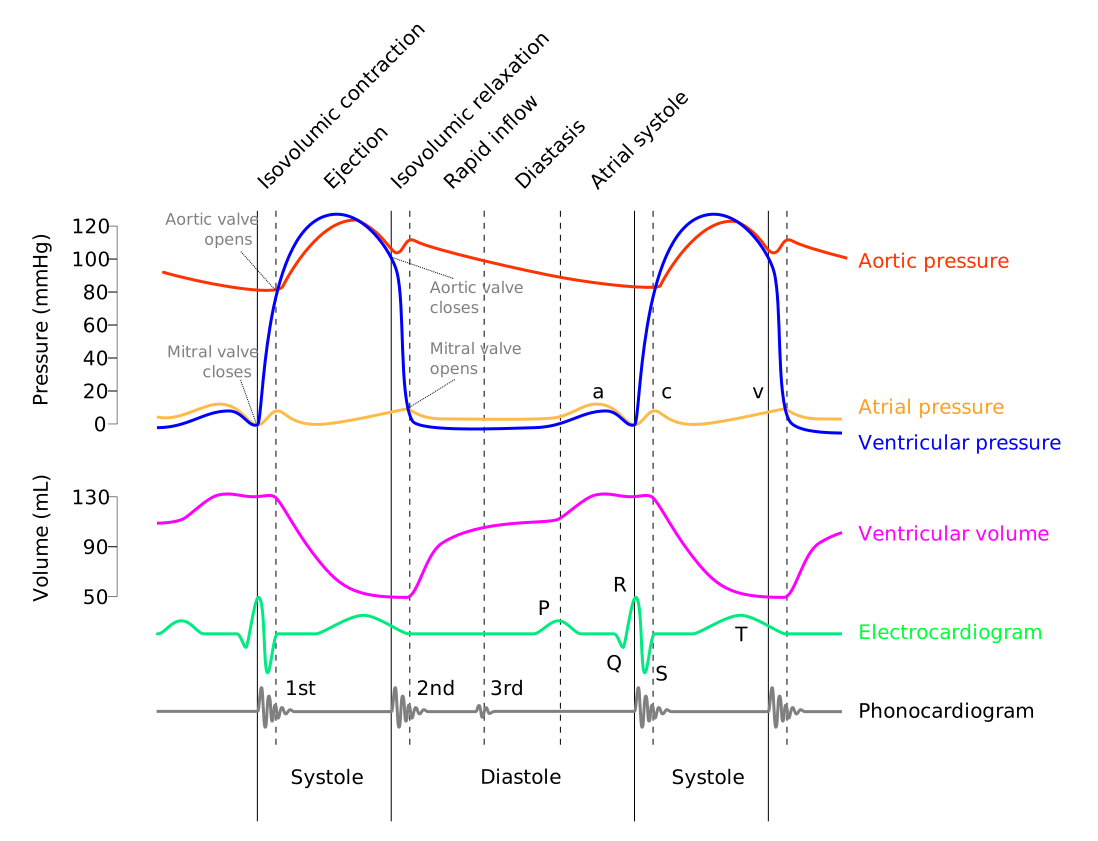
Why Heart Sounds Matter — Even When an EKG Is Normal
An electrocardiogram (EKG) evaluates the electrical signaling of the heart. It tells us whether impulses are traveling appropriately through the cardiac conduction system and whether rhythm disturbances are present. This makes it an essential screening and diagnostic tool.
However, electrical activity does not always reflect mechanical performance.
Heart sounds represent the physical events of the cardiac cycle — valve closure, valve opening, chamber filling, and the dynamics of blood flow. A phonocardiogram (Heart Sound Recorder) provides a visual recording of these sounds, allowing for more detailed evaluation of timing relationships between electrical activation (the ECG tracing) and mechanical function (valve motion and ventricular filling).
In some individuals, symptoms such as reduced stamina, subtle shortness of breath, or inconsistent recovery from exertion may occur even when an EKG appears normal. In these situations, evaluating heart sounds can add important context. Variations in valve timing, intensity, or filling dynamics may reveal functional patterns that are not captured by electrical tracing alone.
When heart sound analysis is integrated with history, physical examination, laboratory markers, and metabolic assessment, it supports a more complete understanding of cardiovascular performance. Rather than focusing only on the presence or absence of disease, this approach helps assess how efficiently the heart is functioning under real-world stress and daily demands.
For patients seeking a deeper systems-based evaluation, mechanical insight can meaningfully expand the conversation.
When Additional Evaluation May Be Appropriate
Subtle cardiovascular symptoms are common, and many improve with foundational lifestyle changes. However, when patterns persist or progressively worsen, it may be appropriate to look more closely.
Further evaluation is especially reasonable if:
- Symptoms continue despite consistent nutrition, sleep, and stress adjustments
- There is a strong family history of cardiovascular disease
- Exercise tolerance steadily declines rather than improves
- Palpitations, lightheadedness, or shortness of breath become more frequent
- Recovery after exertion feels disproportionately slow
The goal of additional assessment is not simply to rule out acute disease, but to better understand how the cardiovascular system is functioning within the broader context of metabolism, inflammation, and nervous system regulation.
Professional guidance can help determine whether symptoms reflect lifestyle strain, mechanical inefficiency, autonomic imbalance, or a need for more traditional cardiac evaluation. In many cases, early clarification provides reassurance. In others, it helps identify areas where targeted support may improve resilience and long-term function.
Cardiovascular Evaluation in Houston and Cypress
For individuals in Houston, Cypress, and the surrounding Northwest Houston area who are seeking a more comprehensive view of heart health, a systems-based evaluation may help connect persistent symptoms with underlying functional patterns.
At The Hayden Institute, cardiovascular assessments often include a review of lifestyle factors, metabolic markers, and — when appropriate — heart sound analysis to better understand mechanical function alongside electrical rhythm. This approach is designed to complement conventional cardiac care, not replace it, and to provide additional context when symptoms do not fully align with routine testing.
Patients in the Houston and Cypress area who are interested in exploring a functional perspective on cardiovascular health can review available services through the Functional Medicine section of the website or visit the New Patients page for additional information.
If You Are Outside the Houston Area
For readers located outside Houston or Cypress, working with a local healthcare professional who is open to a systems-based cardiovascular evaluation can still provide meaningful insight.
When searching for a provider, consider looking for someone who:
- Reviews lifestyle, metabolic, and stress patterns alongside standard testing
- Integrates conventional cardiac screening with broader functional assessment
- Understands both electrical evaluation (such as EKG) and mechanical performance of the heart
Even without advanced diagnostic tools, a thorough history, thoughtful lab interpretation, and careful physical examination can often clarify patterns that contribute to fatigue, reduced stamina, palpitations, or exercise intolerance.
The goal is not simply to identify disease, but to understand how efficiently the cardiovascular system is functioning within the context of daily life.
Closing Thoughts
Heart health is rarely defined by a single lab value or isolated symptom. Electrical rhythm, mechanical efficiency, metabolic stability, inflammation, sleep quality, and nervous system balance all influence cardiovascular performance over time.
A broader, systems-based view can help bring clarity to symptoms that standard screening tests alone may not fully explain.diagnose, treat, or cure any condition. For personalized guidance, consult a qualified healthcare professional.